Build in public has become the default marketing channel for solo founders and small SaaS teams. A well-crafted “$0 to $1K MRR” thread can pull in six figures of impressions, and founders who share a milestone with a timeline and a lessons-learned breakdown routinely see multiples of the engagement of a plain number.
The problem is that a screenshot is disposable by design. It’s built for a feed that moves on in a day, and it lives or dies by an algorithm the founder doesn’t control. Nothing about it survives the scroll. That gap — a milestone that matters permanently, marked by a post that matters for about 48 hours — is exactly what’s pushing builders back toward something that sits on a shelf instead of a timeline.
Origin
Where the Habit Started
The modern build-in-public movement traces a fairly direct line back to Pieter Levels, who in 2014 publicly committed to shipping 12 complete startups in 12 months — not prototypes, fully working products with live payment systems from day one. The challenge produced Nomad List, which became a sustained, high-revenue business, and the format — commit publicly, ship on a cadence, report results in the open — became the template thousands of solo founders have run variations of ever since.
What made it stick culturally wasn’t just the shipping speed. It was that each finished startup was treated as a discrete, nameable milestone rather than just “progress.” That’s the same instinct behind founders today marking a $10K MRR month or a first paying customer as an event worth commemorating.
A revenue tweet gets 100,000 impressions and a two-day half-life. A trophy on your desk outlasts the algorithm.
— Token Trophy
The ladder
The Modern Milestone Ladder
Not every metric deserves a physical award — that would get expensive and meaningless fast. But a handful have become the de facto rungs founders treat as genuinely worth marking, especially now that a large share of new indie SaaS products are shipped with AI coding tools like Claude Code and OpenAI’s Codex.
| Milestone | What it proves | How builders mark it |
|---|---|---|
| First customer | Someone besides you believes it’s worth paying for | Screenshot the receipt — often the first thing worth a small desk trophy |
| $1K MRR | Revenue is repeatable, not a fluke | Public thread + a token award for the desk |
| $10K MRR | The business can plausibly replace a salary | Team-visible award; often the first one in a shared office |
| AI-built product hits revenue | The build process itself is the story | A model-branded token award tied to the tool that shipped it |
| Acquisition / exit | The whole run, end to end | The one milestone almost everyone wishes they’d marked with more than a tweet |
Why it works
Why a Physical Award Beats Another Screenshot
None of this is about vanity. There are practical reasons the habit is spreading.
Algorithms change, accounts get suspended, threads get buried — a trophy on a shelf doesn’t depend on a feed to keep existing.
Candidates and customers who visit in person read a milestone wall as evidence the company actually ships, not just posts.
Deciding a milestone is trophy-worthy makes founders define what progress means, instead of treating every number as equally postable.
A physical award is a prop — it photographs well, it’s a natural excuse for a follow-up post, and it ages better than a dashboard screenshot.
And relative to what it marks, it’s cheap. A custom award running $25–$100 is a rounding error against the revenue or the raise it commemorates.
Shipping with AI?
Match the Marker to How It Was Built
If you’re building with AI tools and want the milestone to nod at how the thing actually got shipped, that’s exactly what the Anthropic Token Award and OpenAI Token Award are built for — a $99 way to mark “I shipped this with Claude Code” or “this one was built on Codex” without it looking like a generic participation trophy.
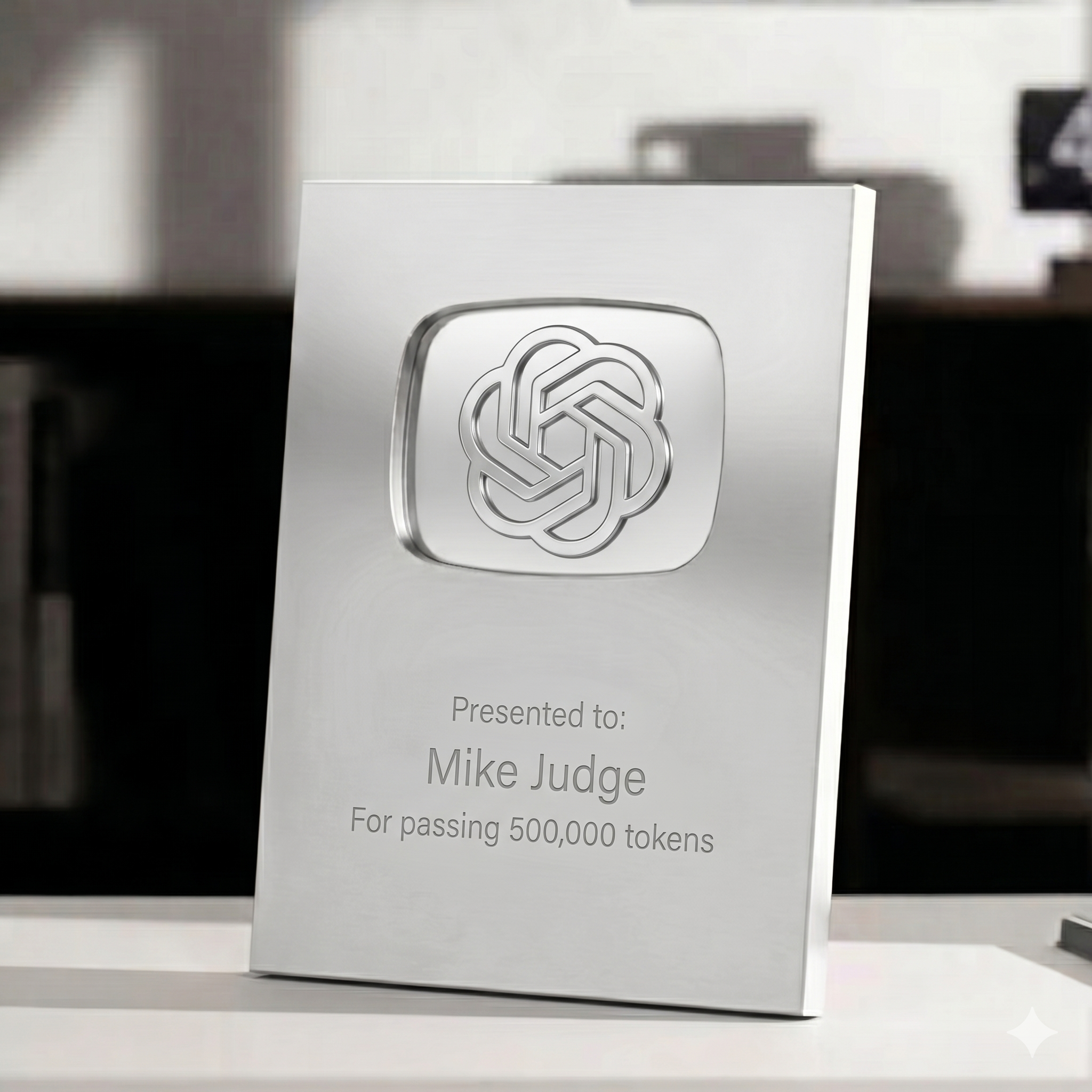
Solid aluminum alloy, gold or silver finish, 24 × 31 × 2 cm, ~0.65 kg. $99, engraved to order.
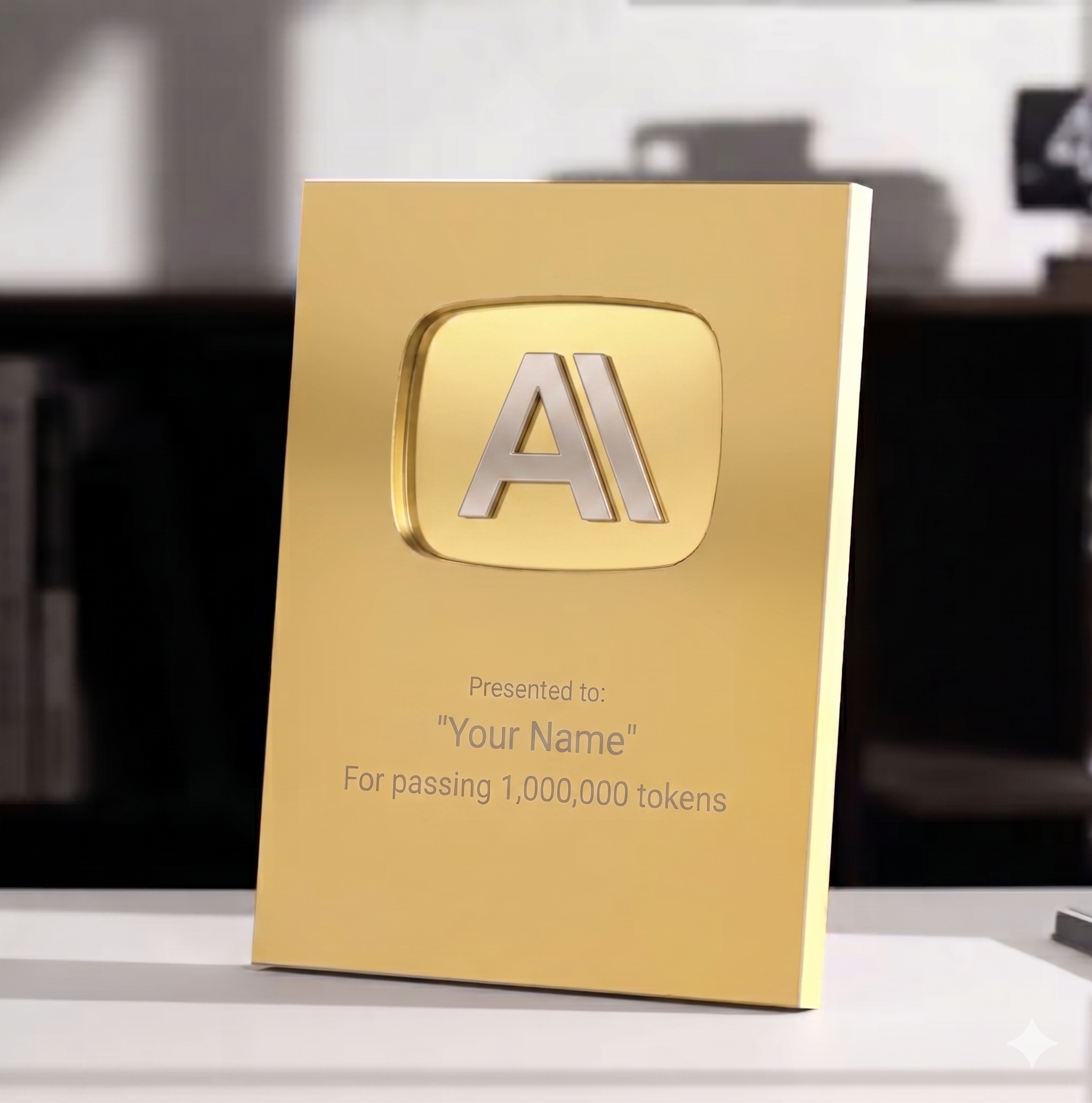
Solid aluminum alloy, gold or silver finish, 24 × 31 × 2 cm, ~0.65 kg. $99, engraved to order.
Do it in advance
Build It Into the Roadmap, Not Bolt It On
The founders who do this well don’t wait until an exit to think about it. They decide in advance which rungs on the ladder are trophy-worthy, budget for it the same way they’d budget for a launch graphic or a domain renewal, and treat the unboxing as its own small piece of build-in-public content.
It costs less than most tools in the stack — and it’s the one milestone marker that’s still there a year later when the screenshot is long gone from anyone’s feed.
Leave a Reply